The Valedictorian’s Speech and the Controversy That Followed
In a small town in North Carolina, a high school valedictorian found herself at the center of a heated debate after her graduation speech was abruptly cut short. Leen Hijaz, the valedictorian of Clayton High School’s Class of 2026, shared her final message with the audience on the football field, only to be interrupted by a school official.
Hijaz began her address with a powerful statement about the importance of having a voice. “Every single person here has a voice… We are privileged to have the freedom to use it when so many people around the world are struggling and suffering to be heard,” she said. Her words resonated with the crowd, but the tone of her speech quickly shifted as she addressed global issues.
A Message About Global Struggles
As she continued, Hijaz spoke about the plight of people in various countries, including Palestine, Sudan, Congo, and Afghanistan. She mentioned how families were being torn apart by immigration policies, specifically referencing ICE (Immigration & Customs Enforcement). “These are not distant issues, they are happening right now as I speak,” she added.
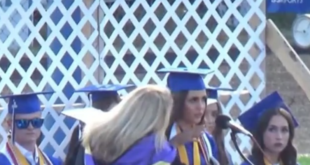
At this point, Principal Melissa Moore Hubbard appeared on camera, grabbing Hijaz by the arm and guiding her away from the microphone. The interruption ended her speech before she could finish.
Student Reactions and the School’s Response
Clayton High School student Owen Ring, who was present during the event, expressed his confusion about the situation. “I don’t really know why they would cut her off,” he said. “She was just saying what was happening. But it’s kind of crazy to me.”
The Johnston County Public Schools district released a statement addressing the incident. They explained that during the graduation ceremony, a student deviated from her approved remarks. Administrators intervened to maintain the integrity and focus of the program. “This action was not about limiting a student’s voice, but about ensuring that a school-sponsored event remained consistent with its intended purpose,” the statement read.
Hijaz claimed that her speech was about giving a voice to the voiceless, especially within her Muslim and Arab communities. She described feeling hurt when the principal told her that she was making it about herself. “I sat here and I spoke up for all of the people in my country and all the other countries that are unable to graduate,” she said.
The Fight for Expression
Hijaz had fought for six months to get the opportunity to speak at graduation. She viewed it as a chance to represent her community and share her perspective. However, her speech led to a controversial outcome—her diploma was reportedly withheld.
WNCN reached out to the district regarding the issue, and they confirmed that the matter was under review. The district emphasized their commitment to supporting student expression while maintaining the structure and expectations of school-sponsored activities.
The Broader Implications
The incident sparked discussions about free speech, the role of schools in allowing student expression, and the balance between individual rights and institutional responsibilities. Students like Owen Ring felt that everyone should have the right to express their opinions, even if they differ from the majority.
Hijaz’s story highlights the challenges faced by students who want to use their platforms to raise awareness about important social and political issues. It also raises questions about how schools handle such situations and whether they prioritize inclusivity and respect over strict adherence to pre-approved content.
Conclusion
The controversy surrounding Leen Hijaz’s graduation speech has brought attention to the complex relationship between student expression and school policies. While the district maintains that their actions were aimed at preserving the integrity of the event, Hijaz and her supporters argue that her right to speak was unfairly suppressed.
As the situation continues to unfold, it serves as a reminder of the ongoing dialogue about freedom of speech, the power of education, and the responsibility of institutions to support diverse voices. The incident has left a lasting impact on the community, prompting reflection on how to balance these competing values in the future.