The U.S. Urges European Countries to Adopt Travel Restrictions in Response to Ebola Outbreak
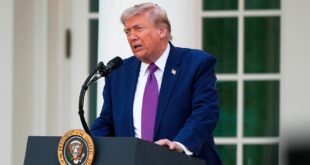
As the global community grapples with the ongoing Ebola outbreak, the Trump administration is urging European countries to implement travel restrictions similar to those imposed by the United States. This move comes as the U.S. prepares to host the largest-ever World Cup, which has raised concerns about the potential spread of the disease.
According to a State Department cable reviewed by NBC News, the U.S. has warned European nations that failing to adopt the administration’s precautions could lead to consequences. While the State Department has not provided further details on what actions might be taken, it is clear that the U.S. is taking a proactive stance in protecting its citizens and visitors during this international event.
The U.S. is also engaging with countries in the Middle East regarding measures to prevent the spread of Ebola. A U.S. official confirmed that diplomatic officials are in contact with various countries around the world to coordinate their approach to safeguarding citizens, including the millions of visitors, fans, athletes, and tourists expected during the FIFA World Cup.
“The Trump administration is protecting our nation and its citizens by upholding the highest standards of national security and public health,” said a spokesperson for the State Department. “We do not comment on private diplomatic conversations.”
Challenges of Hosting the World Cup Amid an Ebola Outbreak
The Ebola outbreak in central Africa has added complexity to the already challenging task of preparing for the World Cup. Beginning on June 11, teams from 48 countries will compete across the U.S., Canada, and Mexico. Over 6 million tickets have been sold to fans traveling from around the world, and teams and fans will be making their way through North America to attend matches in 16 cities, with 11 in the U.S. alone.
“It’s an enormous challenge,” said Susan Reichle, a former USAID counselor and former head of the agency’s Democracy, Conflict and Humanitarian Assistance Bureau. “It really takes constructive engagement and a lot of planning.”
Despite these challenges, there are no plans to ban European Union citizens from traveling to the U.S. for the World Cup. However, the U.S. official noted that European countries have many flight interconnections with the U.S., and if cases arise, measures will be enacted to protect Americans.
Diplomatic Efforts and Proposed Talking Points
In a recent cable, the State Department instructed U.S. diplomats in European capitals to engage with foreign officials at the “highest appropriate level” to request information on precautionary measures related to Ebola. The department also asked diplomats to share responses to the directive and identify a point person for each country to address follow-up questions.
The cable outlined proposed talking points for diplomats, including: “Given the close travel links between Europe and the United States, we request that you adopt similar travel measures as ours to prevent the spread of the disease and ensure we do not have cases affect our countries.” U.S. diplomats were instructed to ask European countries to implement the same travel restrictions as the U.S. and to warn that failure to do so may require the U.S. to take unilateral measures.
Travel Restrictions and Public Health Measures
Under a 30-day order from the Centers for Disease Control and Prevention (CDC), the U.S. has suspended the entry of foreign nationals who were present or transited through the Democratic Republic of the Congo, South Sudan, or Uganda within 21 days of their planned arrival in the U.S. The State Department has also paused the issuance of new visas for individuals meeting the same criteria.
Congo qualified for the World Cup, and its team is based in Houston. In comparison to recent outbreaks, the world is behind in preventing the spread of the severe Bundibugyo strain of Ebola, which has no known treatment or vaccine. Experts note that cuts to U.S. funding for disease surveillance networks contributed to the delayed detection and slow contact tracing that hampered the international response.
Global Response and Financial Commitment
As of Wednesday, the World Health Organization (WHO) reported an estimated 344 confirmed cases of Ebola, including 60 deaths, in Congo, and 15 confirmed cases in neighboring Uganda with one death. The State Department stated that it has spent over $200 million in its response to the outbreak, which includes contact tracing, border and point-of-entry screening, assistance at dozens of health clinics in affected areas, and community education to combat misinformation about how Ebola spreads.
The Trump administration has also implemented efforts to prevent the disease from reaching U.S. shores, including erecting a quarantine center for exposed Americans in Kenya, enhancing health screening at four American airports for travelers from affected countries, and implementing a series of travel restrictions. Secretary of State Marco Rubio recently stated that Americans who test positive for Ebola would be brought to the nearest treatment facility either in Europe or the U.S.