Volvo needs to bring back the beloved wagons
Volvo has always done wagons differently. Where the Germans build them to shout, Volvo builds them to speak softly but carry serious speed. For decades, the Swedish brand has been the master of the long roof—from the beloved 240 and 740 to the wild 850 T-5R and refined V70R. Yet today, while Volvo has gone deep into electrification and crossovers, it has left a glaring hole in its lineup.
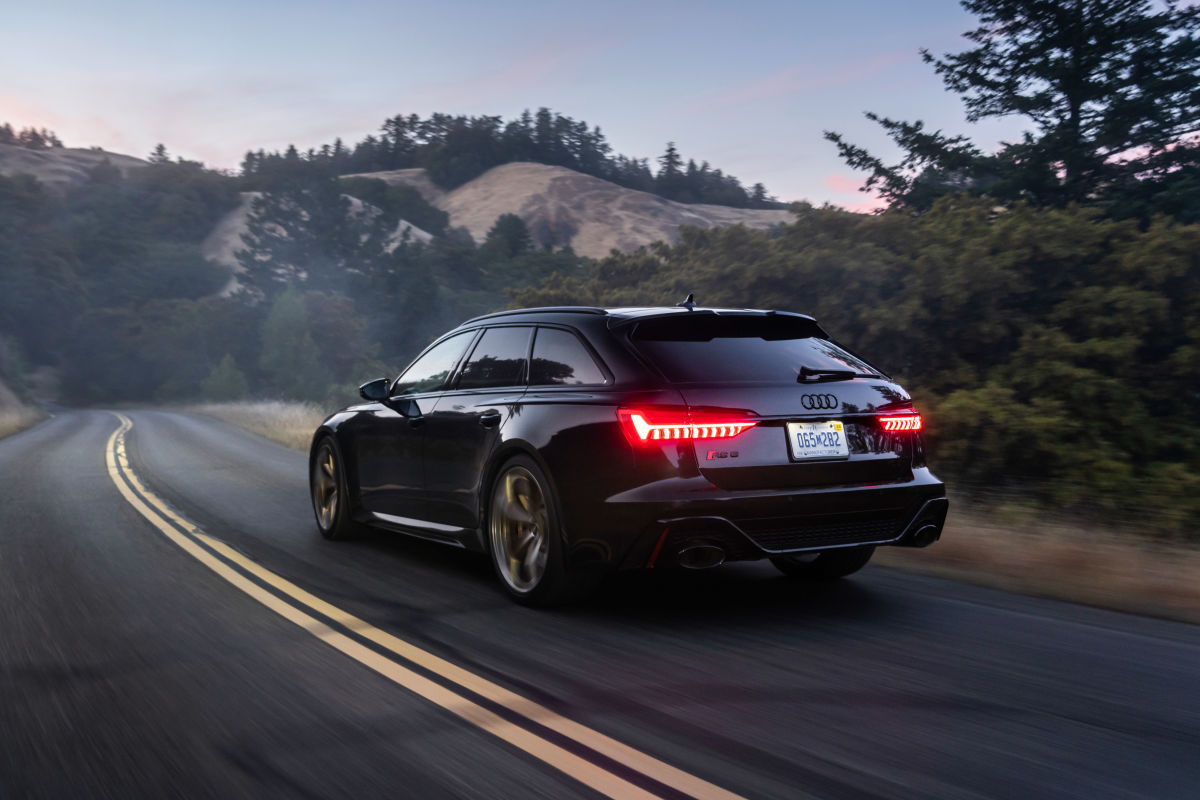
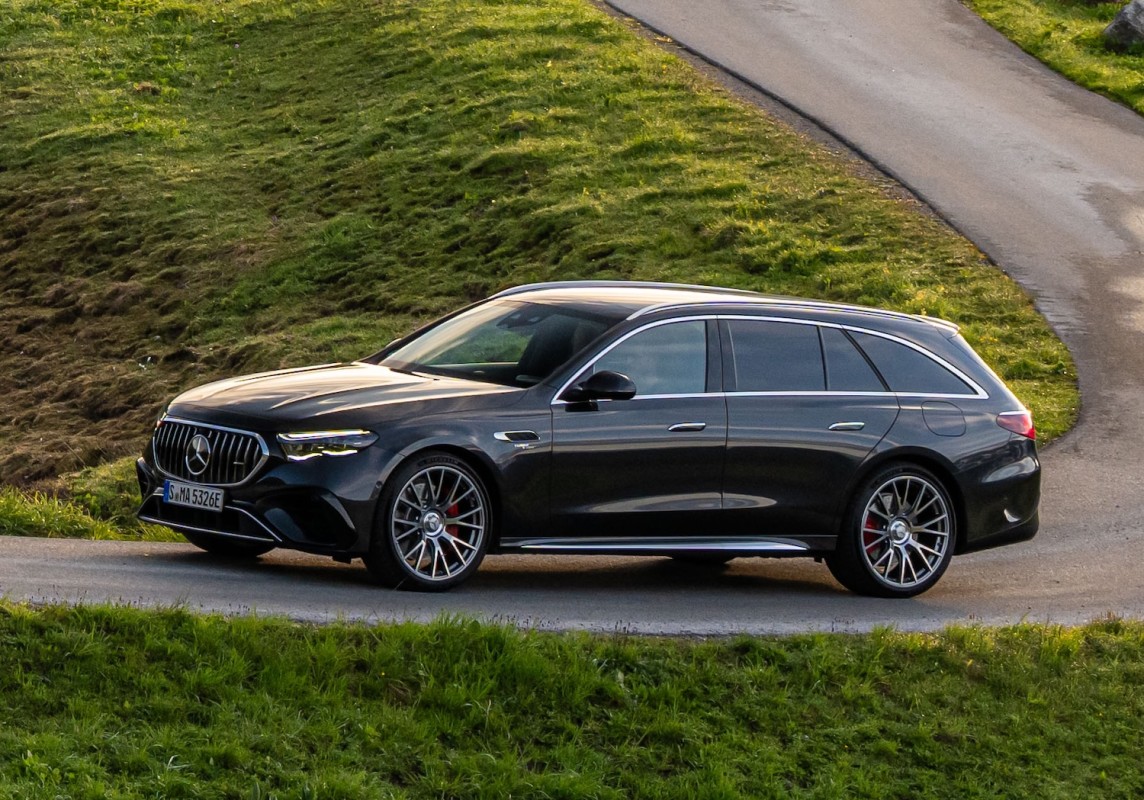
Meanwhile, Audi, BMW, and Mercedes-AMG have doubled down on the high-performance wagon formula and found loyal global audiences. The Audi RS6 Avant has become a cult hero, the new BMW M5 Touring is outselling the M5 sedan, and Mercedes’ AMG E 53 Hybrid Wagon has modernized the genre with electrified muscle. Volvo, a brand that arguably invented the tasteful and refined European wagon, now watches from the sidelines with its V90 and V60 gone from the lineup. It’s time to change that with its own version of a high-performance hybridized super wagon, a new V90R that blends Swedish restraint with supercar stats.
Why the wagon still matters
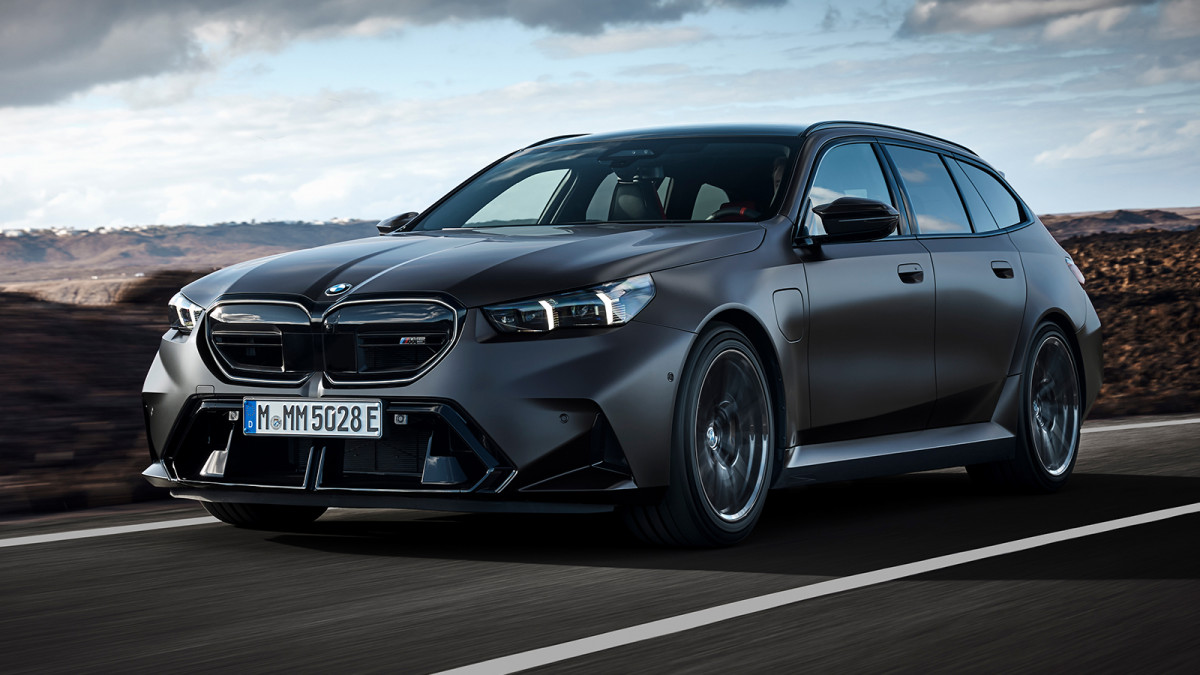
The super wagon is a strange and wonderful beast that’s equal parts practicality and performance. Despite SUVs dominating the landscape, cars like the RS6 Avant, M5 Touring, and E 53 Hybrid Wagon have proven there’s a thriving market for long-roof rockets. The days of ugly wood-paneled family trucksters and floaty Buick Roadmasters are no more.
The RS6 Avant is the benchmark: 621 horsepower, quattro all-wheel drive traction, and a menacing stance that’s as functional as it is stunning. It’s a car that blends family-hauling utility with autobahn annihilation, earning fan status far beyond Germany’s borders. Audi can’t keep them on lots—especially in North America, where enthusiasts campaigned for years to have it imported.
Then there’s the BMW M5 Touring, making its global return in 2025 with plug-in hybrid power and a twin-turbo V8 combined for 717 horsepower. It’s both a halo product and a nod to heritage, a rightful heir to the E61 M5 V10 wagon of the mid-2000s that enthusiasts still revere.
Meanwhile, Mercedes is rewriting its performance rulebook with the AMG E 53 Hybrid Wagon. It’s not just fast; it’s efficient, combining electric torque with inline-six refinement and adaptive chassis tech that makes it as smooth on a commute as it is savage on a track.
Perhaps conventional European wagons aren’t so popular, but if Volvo decided to build one with true power and performance, as well as aggressive looks, it might just take off. The Germans have proven that this is a formula for success, if not record sales.
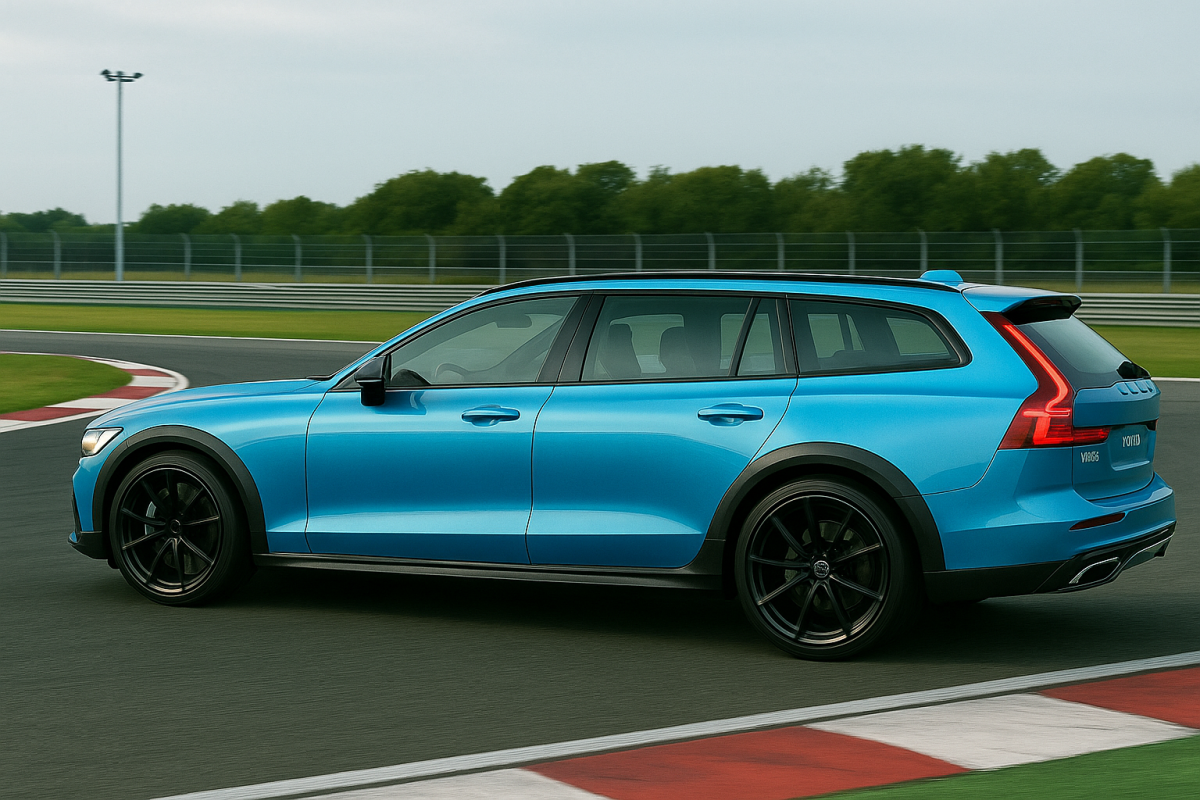
The images here show exactly what that could look like—a Swedish blue V90R with perfect proportions and just the right amount of menace. The car sits low on black 21-inch forged wheels, wearing black fender trim and widened arches that evoke the 1997 Volvo 850R’s muscular stance minus the boxiness.
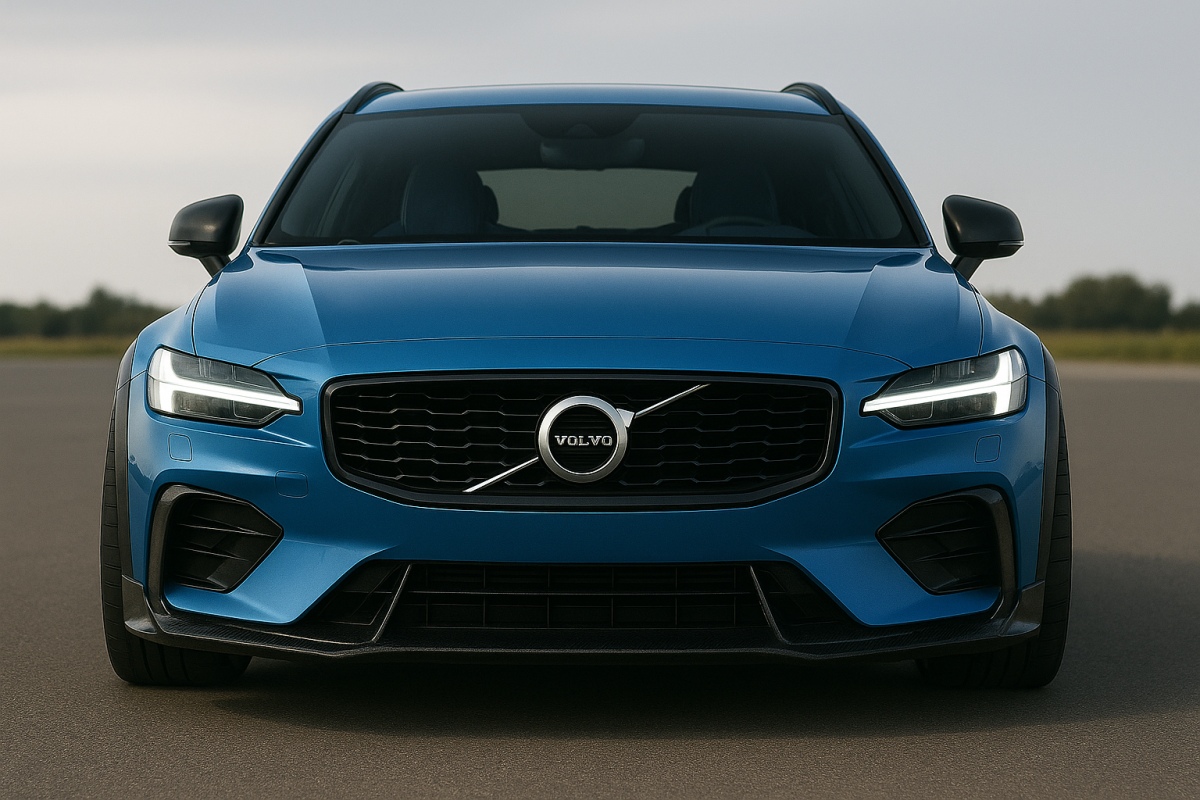
Up front, the face is sharper and more assertive—larger intakes, gloss-black mesh grille, and “Thor’s Hammer” headlights, one of the brand’s best-executed details. The hood creases add tension, while the roofline flows elegantly into those gorgeous signature Volvo taillights. The rear is finished with quad exhausts and a diffuser that hints at function over flash.
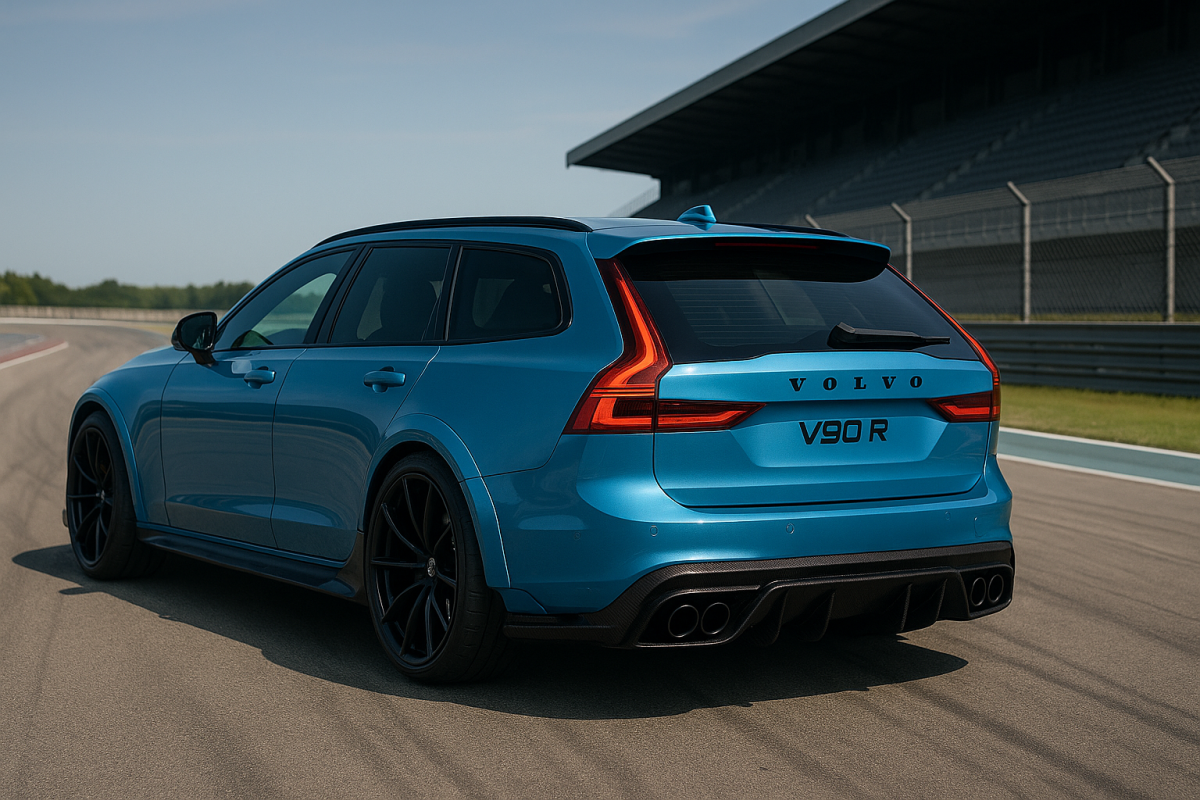
From a distance, it’s unmistakably Volvo—clean, modern, and architectural. It retains just about everything that made the last V90 so stunning. Original design elements, conservatively applied creases and contours, a long and elegant roofline, and a sleek profile. It’s not overstyled, a Swedish design trait, but it exhibits details that add a proper dose of aggression. The good news is that it’s not just skin deep.
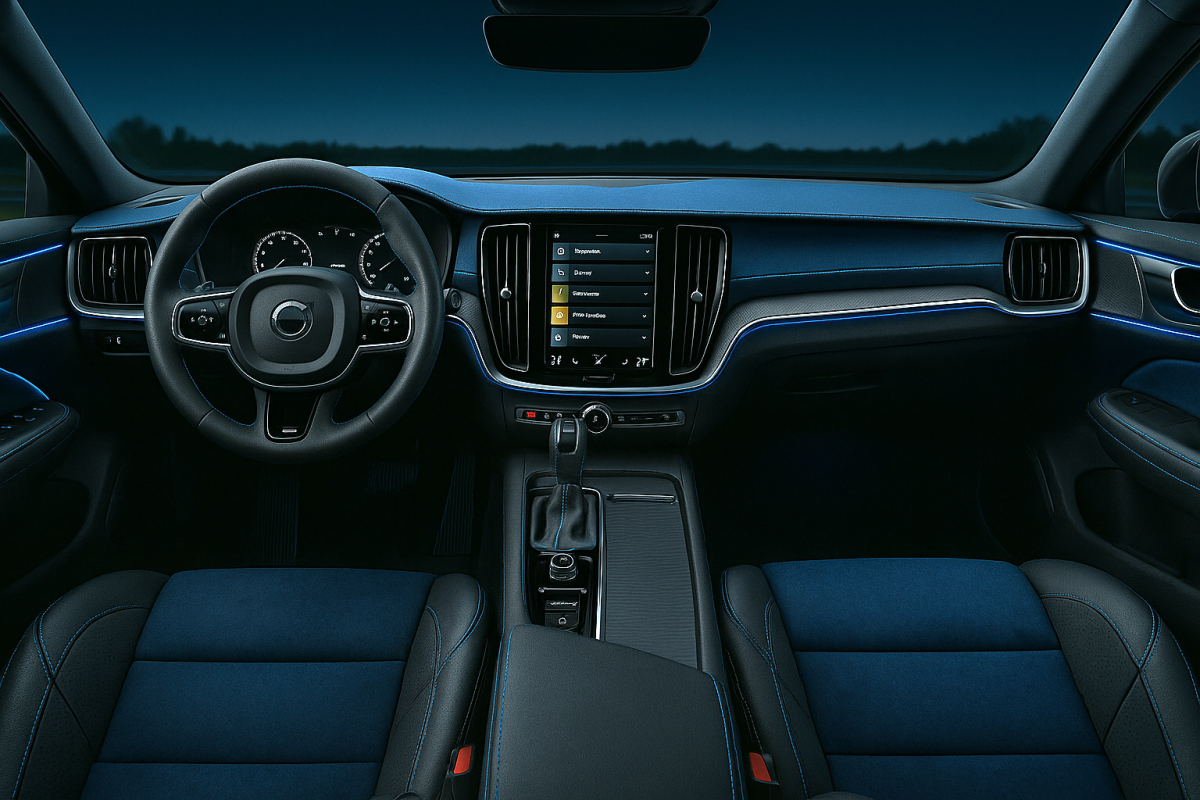
Inside, it’s Scandinavian minimalism meets motorsport focus. Alcantara and leather mix with brushed aluminum and blue accent stitching. The signature vertical touchscreen remains, but with a performance-oriented interface that displays power flow, drive modes, and telemetry data. This would be a driver’s cockpit wrapped in Volvo’s signature minimalist design while employing blue ambient lighting, gobs of blue Alcantara suede on the seats and dash, as well as plenty of blue stitching everywhere.
Performance: Electrified firepower
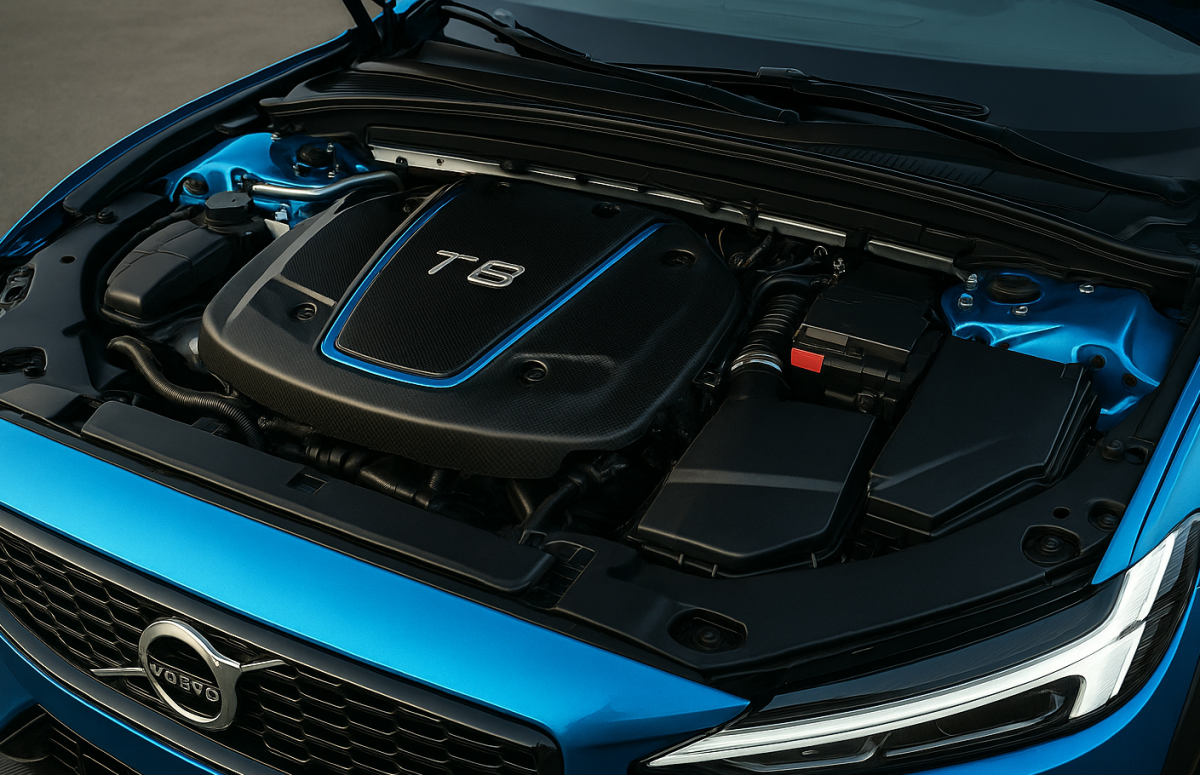
Volvo doesn’t need to start from scratch. Its T8 plug-in hybrid system already offers a solid foundation. Currently producing 455 horsepower and 523 lb-ft of torque in the XC90 and S60 Recharge, it’s only a few engineering tweaks away from true super wagon territory. A twin-turbocharged 2.0-liter engine pairs with upgraded dual electric motors, delivering 620 horsepower and 700 lb-ft of torque through a rear-biased AWD system. Launch control would deliver 0–60 mph in around 3.5 seconds, while adaptive air suspension and torque vectoring would provide both composure and handling.
The brand’s move toward electrification doesn’t have to mean the end of performance—it just needs a new interpretation of it. A V90R could redefine the segment, showing that speed can be intelligent, refined, and sustainable. Volvo’s design language is tailor-made for this mission. Few brands can make a performance car look both sophisticated and dangerous at the same time. The company just needs to give its designers and engineers permission to let loose.
Final thoughts
When it comes to power wagons, it’s Volvo’s turn to step back into the ring. The brand has the legacy, the design acumen, and the technology. What it needs is the courage to build something irrational again—something that speaks to drivers as much as it does to data analysts. A Volvo super wagon would do just that in true Swedish fashion.