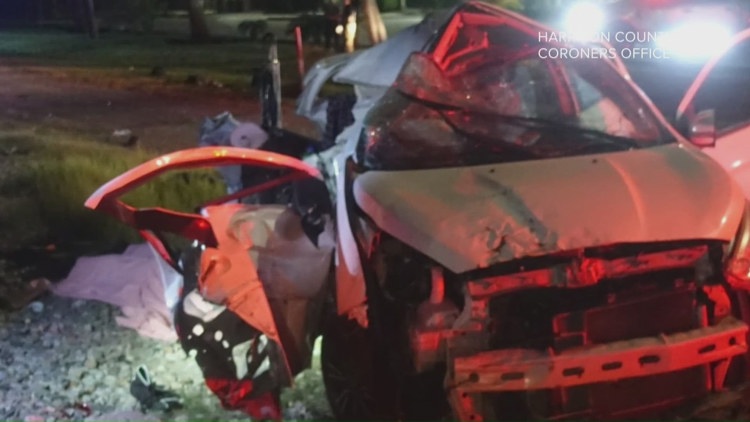
Amtrak’s Mardi Gras Service has continued its operations between New Orleans and Mobile following a non-fatal train crash over the weekend. The incident involved one of Amtrak’s trains, which struck a vehicle at a rail crossing while heading toward New Orleans. The train was carrying 48 passengers, none of whom were injured. However, several crew members received medical attention at the scene before service was temporarily halted and then resumed.
Since the route began operating in August, there have been six fatalities in four separate crashes along the Mardi Gras Service line between New Orleans and Mobile. Notably, none of these fatal incidents occurred within the city of New Orleans itself.
The crashes have taken place at various types of rail crossings. Some involved gated crossings, others had only lights, and some were public grade crossings where officials confirmed that warning systems were functioning properly at the time of the incidents. According to federal safety data, railroad-highway grade crossings remain a significant cause of rail-related deaths across the United States.
Russell Quimby, a former National Transportation Safety Board (NTSB) rail accident investigator, highlighted the challenges that come with reintroducing passenger rail services to communities. He noted that “people in the area are going to take a while for them to get used to it,” especially when passenger trains operate at speeds significantly faster than freight trains.
Quimby pointed out that adjustment challenges can be even more pronounced at passive crossings—locations without gates where only signs are present. At these crossings, he explained, “a lot of times people blow through a grade crossing without really looking.” This behavior is similar to drivers rolling through stop signs in familiar neighborhoods because they don’t expect a train.
In several of the deadly crashes on the Mardi Gras Service route, investigators found that warning systems were working correctly. Despite this, Quimby emphasized that collisions can still occur because “the trains have right-of-way at all grade crossings” and typically cannot stop within the visual sight distance.
When residents question why certain crossings lack gates or additional warnings, Quimby explained that such decisions are often made by local authorities rather than the rail operator. He noted that local police and governments usually petition the state when crossings experience repeated issues. State agencies then use federal funding formulas to determine which crossings receive improvements, with the money generally coming from the federal government.
The National Transportation Safety Board does not investigate every train crash, leaving most rail safety oversight to the Federal Railroad Administration.
CSX, which owns much of the track used by the Mardi Gras Service, stated that safety planning for the route involved federal and state regulators before passenger service resumed.
Amtrak, on the other hand, has committed to continuing its focus on public education along the Mardi Gras Service route. The company is collaborating with Operation Lifesaver to promote driver awareness at rail crossings. These efforts include reminders for drivers to look for blue Emergency Notification System signs, which provide a direct way to contact rail dispatchers if a vehicle becomes stuck on the tracks.
While each crash is investigated individually, Quimby noted that such incidents rarely lead to immediate, systemwide changes. Instead, he emphasized that education remains a key priority. He added that “the best thing they can do is probably a public relations campaign,” so that “the public becomes a little bit more aware,” particularly as the new passenger service continues to expand.