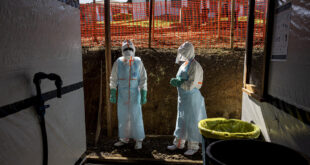
A Journey Through Quarantine and Back Home
After weeks in a federal quarantine center, Dr. Stephen Kornfeld is finally back home in Central Oregon and doing “phenomenally well.” The semi-retired Bend oncologist became one of the most recognizable faces in the deadly international hantavirus scare when he stepped in after the doctor aboard the MV Honius became ill during a rare outbreak that killed three passengers.
Kornfeld, 69, was among a group of U.S. passengers who spent about three weeks at the National Quarantine Unit at the University of Nebraska Medical Center in Omaha before returning home Monday to complete the final half of a 42-day quarantine. He landed around noon at Redmond Municipal Airport, where his wife and staff from the Oregon Health Authority were waiting. A sheriff’s deputy followed them home, and he remains under round-the-clock watch of a security officer outside his house as a precaution.
“Home quarantine is night and day compared to facility quarantine,” Kornfeld told The Oregonian/OregonLive on Tuesday. “I can eat whenever I want. I can sleep on my own bed.”
Officials from Nebraska Medicine, the health system that runs the University of Nebraska Medical Center and its federal quarantine unit, said Kornfeld and four other passengers traveled under biocontainment precautions and didn’t use commercial flights. The others went home to New York, California, and Arizona. Thirteen passengers remain in Omaha, where they are completing the full monitoring period. To date, none of them has shown signs of hantavirus infection.
Officials with the Oregon Health Authority confirmed that the agency is tracking an Oregon resident who stayed at the Nebraska facility, but they didn’t release a name, citing privacy concerns. Kornfeld said he was the passenger referenced in the state’s announcement.
Health officials said the risk of Kornfeld spreading hantavirus is “extremely low” and that they have no concerns about transmission to the general public.
Kornfeld said he didn’t actually have hantavirus – an early test was determined to be a false positive.
On his first evening back, he and his wife ate dinner on their patio, seated at opposite ends of a large outdoor table. They still have to follow quarantine rules, he said, but after being apart since March, simply being together mattered.
“It was nice just to be in her presence,” he said.
From Passenger to Ship’s Doctor
Kornfeld boarded the Hondius for what was supposed to be a six-week birding trip through remote islands in the South Atlantic — just one trek in a year packed with travel plans that included Mongolia and Borneo.
Instead, he found himself in the middle of a medical emergency aboard a vessel thousands of miles from shore.
The ship departed Ushuaia, Argentina, on April 1. After a passenger fell ill and died April 11, Kornfeld said he went to speak with the ship’s doctor and offered help, identifying himself as an internist and oncologist.
Weeks later, another passenger became critically ill and the ship’s doctor grew too sick to continue working.
“I kind of fell into it,” Kornfeld said. “I was a passenger who suddenly was the doctor taking care of all these sick hantavirus people.”
Other physicians were aboard the ship, he said, but most had retired years earlier or felt the situation was outside their expertise.
“I’m not a critical care physician and I’m not an infectious disease physician,” he said. “But as an oncologist, you take care of a lot of really sick people.”
The outbreak involved the Andes strain of hantavirus, a rare form of the disease found primarily in South America. Unlike the strain typically seen in the United States, the Andes virus has been linked to limited person-to-person transmission.
Kornfeld later became a patient himself after a test collected aboard the ship suggested he might be infected, making him the only presumed American hantavirus case.
‘You Felt Like a Prisoner’
Federal officials flew him to Omaha and placed him in a specialized biocontainment unit designed for patients with highly infectious diseases.
He said he agreed with that decision at the time because hantavirus can worsen quickly and he wanted to be in a place where staff were ready to treat him if he became ill.
But Kornfeld said he never developed symptoms and follow-up tests in Nebraska came back negative. Antibody tests also found no sign of a recent hantavirus infection, he said.
Doctors later concluded the original result was likely a false positive, he said.
After three days of isolation in the biocontainment unit, Kornfeld said he moved into the National Quarantine Unit with other passengers who had been exposed to the virus but weren’t sick.
“I was treated very aggressively from a monitoring standpoint because nobody knew what it meant,” he said, adding that the uncertainty highlighted how little scientists know about Andes hantavirus.
Passengers spent weeks largely confined to their rooms inside a facility designed to contain dangerous pathogens, not house healthy people for more than a month, Kornfeld said.
It took days, he said, to get basic supplies such as cleaning products and paper towels and that meals sometimes arrived at irregular times and were already cold. It took about 10 days before passengers were allowed brief, closely supervised trips to a rooftop area for fresh air.
“It wasn’t a prison,” he said. “But you felt like a prisoner.”
Even so, Kornfeld said he and other passengers exposed to Andes virus “did not question the need for a 42-day quarantine period.” What frustrated many of them, he said, was the shifting guidance about where that quarantine should take place.
Federal officials initially indicated passengers could return home after an evaluation period in Nebraska if they followed strict precautions, Kornfeld said. Later, officials pushed passengers to stay in Omaha for at least 21 days and warned that those who left sooner could face federal quarantine orders.
Back Home
As some passengers prepared to leave the Nebraska quarantine center after three weeks, Kornfeld said federal officials last week added a new requirement: around-the-clock monitoring for anyone completing quarantine at home.
The requirement left states trying to determine what “24/7 monitoring” actually meant and how it would be carried out, Kornfeld said.
In Bend, it has meant that a private security contractor hired locally now sits in a car outside Kornfeld’s property at all hours.
“I don’t really know what his job is,” Kornfeld said.
In the meantime, he’s taking the home-quarantine rules seriously.
He’s living on a different floor than his wife, putting on an N95 mask any time they might see each other and mostly talking with her by phone. When they do eat together, it’s outside, sitting a good distance apart.
While he found the shifting rules and uneven treatment of different groups of passengers frustrating, Kornfeld drew a distinction between federal policy decisions and the efforts of state and local health officials.
“I have the utmost respect and gratitude to them because they worked tirelessly to satisfy the federal requirements to get me home,” he said of Oregon health officials.
For now, Kornfeld’s world has shrunk considerably. The avid traveler and birder has canceled trips to Mongolia and Borneo and won’t be going on bike rides, hikes, or dinners with friends anytime soon.
“I miss all that stuff. But compared to being stuck in a facility in Nebraska, where I had absolutely no control over anything, this is nice,” he said. “I’m just happy to be home.”