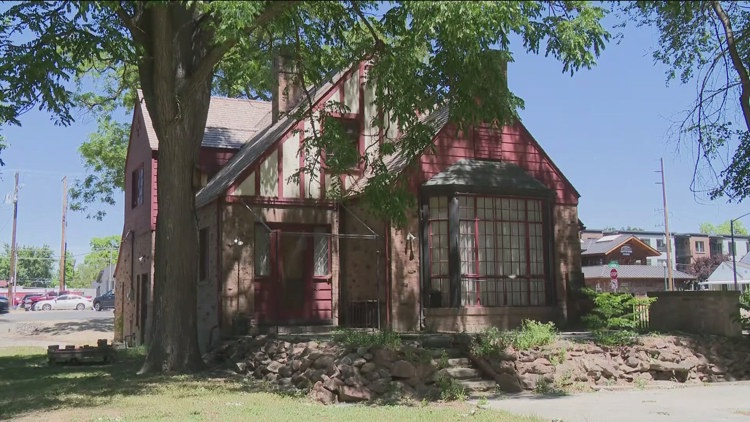
A Historic Home Faces a New Chapter
A historic home that has long been a symbol of Eagle’s past may soon have a new owner. The Eagle City Council recently voted unanimously to explore the possibility of a private sale and redevelopment of the Orville Jackson House property. This decision comes after years of challenges in maintaining the site and efforts to find a long-term public use for it.
The home, built during the Great Depression, was constructed by Orville Jackson, a World War I veteran, drugstore owner, and community leader who played a significant role in shaping the growing community. Former Eagle Mayor Steve Guerber (1986-1994) described Jackson as “Mr. Eagle” to many residents, particularly during the 1930s, 1940s, and 1950s.
The city purchased the property in 2021 with the goal of preserving the historic home and creating a space for public gatherings. Over the years, officials explored various ideas, including community markets, memorials, and a museum, but none of these concepts advanced beyond the planning stages.
“Just a variety of things have been talked about,” Guerber said. “It’s just kind of like nothing really panned out.”
Meanwhile, the cost of maintaining the property has continued to rise. City officials estimate that the house requires roughly $255,000 in repairs, although they admitted this figure is a rough estimate and likely inaccurate. Council members said the ongoing expenses have become increasingly difficult to justify alongside other city priorities.
Councilwoman Nancy Merrill described the property as a “money pit” during a special City Council meeting on May 13th about its future. She noted the significant amount of staff time and money being spent on the property.
Council members also referenced feedback gathered during a recent capital projects open house, where the Jackson House ranked among the lowest priorities for additional city investment. As a result, council members decided they needed to “stop the hemorrhage” of ongoing maintenance costs and voted to pursue a private sale with deed restrictions attached to the property.
These restrictions are designed to preserve the home’s historic character. Under an agreement tied to the property, the Jackson House cannot be demolished. If a future owner attempts to remove the structure, ownership of the property would revert to the Jackson family.
“If the city sells the property to somebody who says, ‘I want to remove the building,’ and does not comply with that guideline, then this entire property goes back to the Jackson family,” Guerber said.
Despite supporting preservation efforts, Guerber acknowledged the challenge facing city leaders as Eagle continues to grow. He hopes any future development can incorporate adaptive reuse of the building while maintaining its historic significance.
“I don’t know what price you put on the preservation of important history,” Guerber said. “I don’t think you can put a price on it.”
For Guerber, the Jackson House represents more than a building. It serves as a reminder of the people and events that shaped Eagle long before the city’s recent growth. “It tells that story,” he said. “I wish there were more of them.”