As a master gardener with over two decades of experience, I have developed a deep appreciation for various types of salvias. Among them, Russian sage (Salvia yangii) stands out as a personal favorite. This plant is particularly well-suited for gardeners in USDA hardiness zones 4 through 9. With minimal care and attention, Russian sage rewards you with an abundance of hazy purple-blue flowers that add a touch of elegance to any garden.
Previously known as Perovskia atriplicifolia, Russian sage has a soft and airy appearance, characterized by its fine gray leaves, silvery stems, and stunning flowers. Despite its delicate look, it is surprisingly resilient once established. By June, the plant starts producing new growth, which gives it a loose and slightly wild appearance—something I find very charming. However, if the plant grows too quickly, it can become top-heavy and flop over, which is not ideal. A careful trim in June encourages branching, resulting in a denser and more attractive shape. Additionally, this early pruning can enhance the layered flower display and extend the bloom season.
Russian sage is known for its heat and drought tolerance, making it an excellent choice for gardens in exposed areas where other perennials might struggle. It can thrive in lean soil conditions, requiring only full sunlight and good drainage. The plant is also a favorite among pollinators such as bees, butterflies, and hummingbirds, making it a great addition to any pollinator garden. A light pruning in June not only supports these beneficial creatures but also helps maintain the health and appearance of your garden.
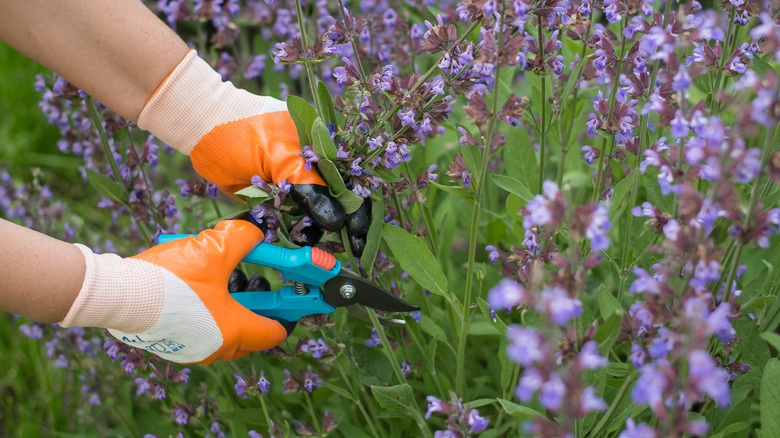
If you’re planning to give your Russian sage a pre-summer trim, June is the ideal time to do so. At this point, the plant is developing strong new stems, but it hasn’t started flowering yet. It’s important to avoid pruning during the first year when the plant is still small and hasn’t fully established itself. Similarly, if the plant is showing signs of drought stress or poor health, it’s best to wait. However, if the plant is healthy and upright with plenty of new growth, pinching back now is an excellent opportunity to achieve a dense, bushy shape that will be covered in flowers by summer.
Keep in mind that this isn’t a heavy pruning session. You want to preserve the plant’s natural, feathery look. Focus on shortening the tallest and fastest-growing stems by cutting just above a leaf node and removing the soft, growing tip. Never remove more than one-third of the length from any single stem. I personally prefer to keep the wild, natural look of the plant, so I usually only prune one part of the plant or reduce the height of the tallest stems. One advantage of a June trim is that it encourages succession flowering. The trimmed stems often produce lateral growth, meaning the untrimmed stems will flower first, followed by the trimmed ones and their new growth.
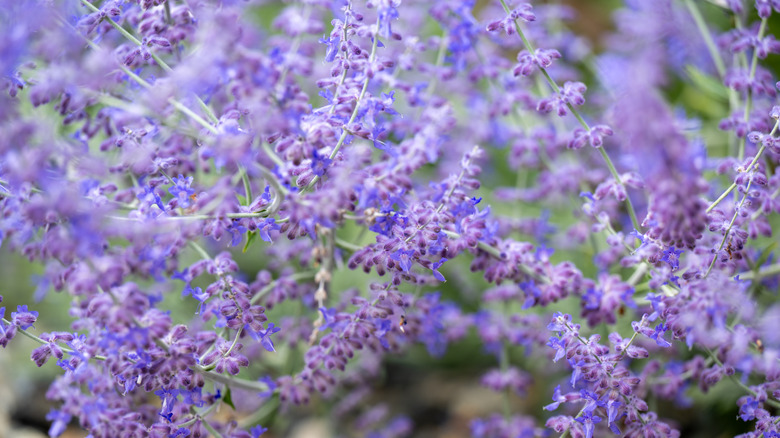
Russian sage is relatively easy to grow, but there are some common mistakes to avoid in June. One of the biggest errors is cutting the plant back too severely, as if it were being pruned in winter. By June, the plant is already producing this year’s flowers, so excessive pruning at this stage can delay blooming or even remove the stems that are about to flower, potentially losing an entire season of blooms. I also advise against removing spent stems too soon. These stems add visual interest to the winter garden, catch frost beautifully, and provide structure after softer perennials have declined. They also help protect the plant’s crown during the winter by catching falling leaves and snow. Spent blooms and stems also serve as a food source and habitat for wildlife.
Another important point to note is that Russian sage is quite resilient. Avoid overwatering, especially if the plant hasn’t fully established itself. In extremely dry conditions, you may need to water it, but too much water can lead to root rot. Similarly, feeding the plant is not recommended. High-nitrogen fertilizers, in particular, can cause the stems to become weak and floppy, which can ruin the plant’s shape. I often see people applying such fertilizers after a June trim, hoping to encourage rapid regrowth. While this may result in fast new growth, it typically leads to weak, unstable stems that don’t benefit the plant in the long run.